
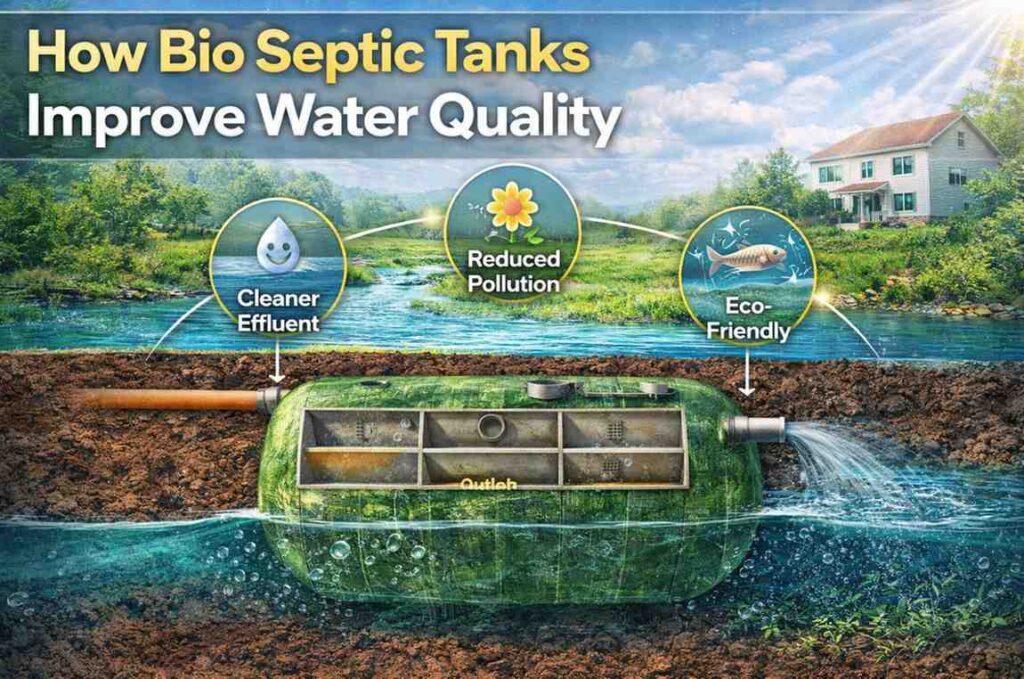
Water quality is becoming a serious concern for homeowners, especially in areas where underground drainage systems are not available. Every household generates wastewater daily from toilets, kitchens, and bathrooms. If this wastewater is not treated properly, it can contaminate groundwater, rivers, and even drinking water sources.
This is where bio septic tanks play a crucial role. Unlike conventional septic systems, bio septic tanks use natural biological processes to treat wastewater effectively and improve overall water quality.
What Is a Bio Septic Tank?
A bio septic tank is an advanced wastewater treatment system that uses beneficial bacteria to break down organic waste. Instead of simply storing waste like traditional septic tanks, bio septic systems actively treat sewage inside the tank.
These systems rely on anaerobic and aerobic bacteria to digest waste, reduce sludge, and produce cleaner effluent. This treated water is then safely discharged into the soil without causing significant pollution.
How Bio Septic Tanks Work
The treatment process inside a bio septic tank happens in stages:
Primary Stage: Solid waste settles at the bottom while lighter materials float on top
Secondary Stage: Bacteria break down organic matter through biological digestion
Final Stage: Treated water flows out into a soak pit or drain field
This multi-stage treatment ensures that harmful substances are reduced before water enters the environment.
How Bio Septic Tanks Improve Water Quality
1. Reduction of Harmful Contaminants
One of the biggest advantages of bio septic tanks is their ability to remove contaminants from wastewater.
They significantly reduce:
Organic waste
Suspended solids
Harmful bacteria and pathogens
Studies show that bio septic tanks can reduce Biochemical Oxygen Demand (BOD) by up to 85–95% and remove a large percentage of disease-causing organisms .
2. Prevention of Groundwater Pollution
Conventional septic tanks often release partially treated water, which can seep into groundwater and contaminate bore wells.
Bio septic tanks produce cleaner effluent, which:
Reduces the risk of groundwater contamination
Prevents the spread of waterborne diseases
Maintains safe drinking water quality
This is especially important in areas where groundwater is the primary water source.
3. Natural Biological Treatment (No Chemicals)
Bio septic tanks do not rely on harmful chemicals for treatment. Instead, they use natural bacteria to break down waste.
Benefits include:
Eco-friendly wastewater treatment
No chemical pollution
Safe discharge into the environment
This makes bio septic tanks a sustainable sanitation solution.
4. Reduction in Nutrient Pollution
Untreated wastewater contains nutrients like nitrogen and phosphorus, which can cause water pollution and algal blooms.
Bio septic systems help by:
Reducing nitrogen levels
Controlling phosphate discharge
Preventing eutrophication in water bodies
Cleaner effluent ensures healthier rivers, lakes, and ecosystems.
5. Improved Soil and Ecosystem Health
When treated water enters the soil, it undergoes further natural filtration. Because bio septic tanks produce cleaner water:
Soil microorganisms remain healthy
Plants can absorb nutrients safely
Ecosystem balance is maintained
This contributes to long-term environmental sustainability.
6. Odor and Sludge Reduction
Traditional septic tanks often produce foul odors and require frequent cleaning. Bio septic tanks minimize these issues by:
Breaking down waste efficiently
Reducing sludge accumulation
Controlling bad smells
This improves hygiene and reduces maintenance needs.
Key Benefits for Water Quality
Using a bio septic tank offers several long-term water quality benefits:
Cleaner groundwater sources
Reduced water pollution
Safe wastewater disposal
Lower risk of contamination
Sustainable water management
These benefits make bio septic systems a better choice for modern homes.
Why Bio Septic Tanks Are Better Than Conventional Systems
Conventional septic tanks mainly separate solids and liquids but do not fully treat wastewater. As a result, harmful substances still enter the environment.
Bio septic tanks, on the other hand:
Provide complete biological treatment
Produce high-quality effluent
Reduce environmental impact
This makes them a superior option for protecting water resources.
Conclusion
Bio septic tanks are an effective and eco-friendly solution for improving water quality. By using natural bacteria to treat wastewater, they significantly reduce contaminants, prevent groundwater pollution, and protect the environment.
In areas where proper sewage systems are not available, bio septic tanks play a critical role in maintaining clean and safe water. Choosing a bio septic system is not just a smart investment for your home—it is a responsible step toward protecting water resources for the future.
FAQS
Bio septic tanks use beneficial bacteria to break down organic waste, reducing harmful contaminants, pathogens, and pollutants before water is released into the soil.
Yes, bio septic tanks produce cleaner effluent compared to conventional systems, which helps prevent groundwater contamination and protects drinking water sources.
Yes, they significantly reduce harmful bacteria and pathogens through biological treatment, making the discharged water much safer for the environment.
Yes, bio septic tanks provide advanced biological treatment, reduce pollution, require less maintenance, and improve overall water quality compared to traditional septic tanks.
Absolutely. They lower nutrient levels like nitrogen and phosphorus, reduce organic waste, and prevent contamination of nearby water bodies.