

Michael Chen thought he had everything figured out. He had researched bio septic tanks extensively, understood how aerobic treatment works, shortlisted a trusted installer, and was finally ready to proceed. Then came the one question that stopped everything:
“What size bio septic tank do you need?”
Michael confidently replied, “We’re a family of four. I guess a standard size will work.”
That assumption nearly cost him thousands.
His installer calmly explained that there is no such thing as a “standard” bio septic tank size. A family of four with two teenagers who take long showers produces far more wastewater than a family of four with toddlers. Add a home office, a beauty salon run from home, regular guests, and suddenly that “standard size” becomes dangerously undersized.
Had Michael gone with his first instinct, he would have faced system overload, slow drainage, foul odors, and potentially full replacement within a few years. That’s when he realized that bio septic tank sizing isn’t guesswork — it’s engineering.
This comprehensive Bio Septic Tank Size Guide for Homes will help you avoid the same mistake. By the end, you will understand:
How to determine the correct bio septic tank capacity for residential use
How to calculate septic tank size properly
How septic tank capacity by number of bedrooms affects approval
How to use a practical bio septic tank volume calculator approach
Why oversizing and undersizing both create problems
Let’s start with the fundamentals.
Why Bio Septic Tank Size Matters More Than You Think
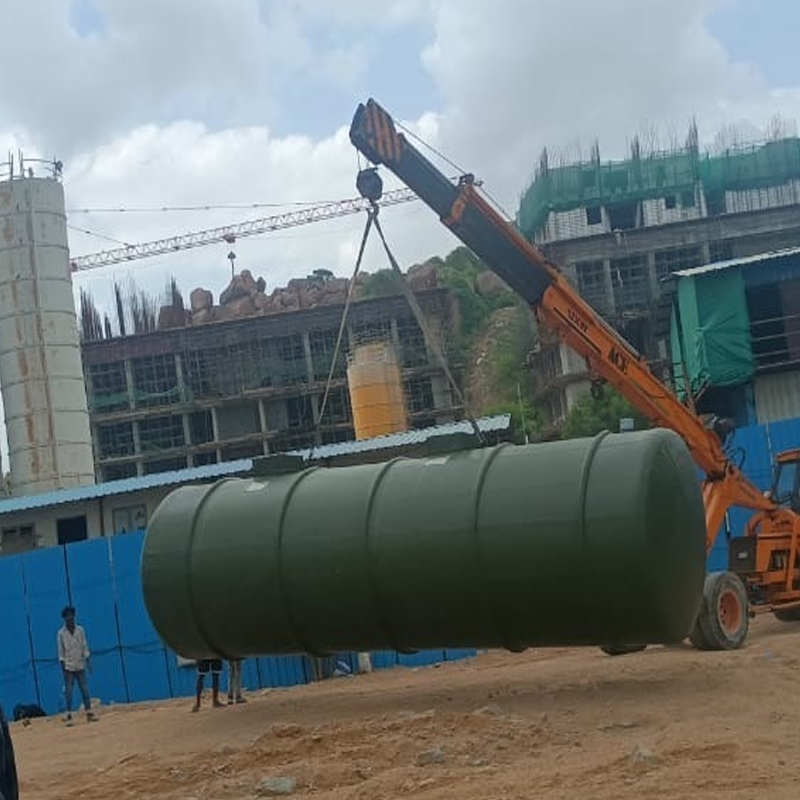
When people hear “tank size,” they assume it simply means storage volume. But with a bio septic tank for home use, capacity is directly linked to treatment performance.
A bio septic tank works using aerobic bacteria that break down waste quickly and efficiently. For this biological process to work correctly, wastewater must remain inside the tank long enough for treatment to occur. This is called retention time.
If the tank is too small:
Wastewater flows through too quickly
Bacteria don’t get enough time to break down solids
Effluent quality drops
Drainage systems get overloaded
Maintenance frequency increases
System lifespan shortens dramatically
If the tank is excessively oversized:
Treatment efficiency may drop due to low organic concentration
Installation cost increases unnecessarily
Aeration systems may operate inefficiently
Proper residential septic tank size ensures:
Stable biological treatment
Optimal retention time
Long-term durability
Reduced maintenance costs
Compliance with regulations
This is why selecting the correct recommended septic tank size for homes is critical.
Key Factors That Determine Bio Septic Tank Capacity
Choosing the right bio septic tank capacity requires evaluating multiple variables. Let’s break them down clearly.
1. Number of Household Members
This is the primary factor in septic tank sizing by occupancy.
On average, each person generates between 150–250 liters of wastewater per day, depending on lifestyle and water usage habits.
This includes:
Toilet flushing
Showering and bathing
Laundry
Dishwashing
Cooking and cleaning
For example:
2 people → Approx. 300–500 liters/day
4 people → Approx. 600–1,000 liters/day
6 people → Approx. 900–1,500 liters/day
Your bio septic tank capacity must handle at least 1.5 to 2 days of wastewater flow for proper biological treatment.
2. Number of Bedrooms (Code-Based Sizing)
Most local regulations use bedroom count as a sizing reference. Even if you have fewer occupants, the system must support full occupancy potential.
Typical code logic:
1–2 bedrooms → Minimum 1,000 liters
3 bedrooms → 1,500–2,000 liters
4 bedrooms → 2,000–3,000 liters
5+ bedrooms → 3,000+ liters
This is why understanding septic tank capacity by number of bedrooms is important. Even a couple living in a 4-bedroom home may be required to install a larger system for compliance.
Always verify local regulations before finalizing your tank size.
3. Daily Water Usage Habits
Not all households use water equally.
Consider two families of four:
Family A:
5-minute showers
Energy-efficient appliances
Low-flow toilets
Laundry twice a week
Family B:
20-minute showers
Regular top-load washing machine
Frequent dishwashing
Daily laundry
Family B may generate 40–60% more wastewater daily.
Your daily wastewater flow calculation must account for real usage patterns, not just theoretical averages.
4. Appliances and Fixtures
Certain features significantly increase wastewater load:
Garbage disposal (+20–30% load)
Water softener (+15% load)
Jacuzzi or large bathtubs (+10–15%)
Multiple washing machines
Home-based salon or spa
When these are present, your home wastewater tank size should be adjusted upward accordingly.
5. Future Growth and Planning
Your septic tank should serve your home for 15–25 years.
Ask yourself:
Will children grow into teenagers (higher water usage)?
Are elderly parents likely to move in?
Are you planning renovations or bathroom additions?
Will you convert a room into a rental space?
It is always safer to include a 10–20% capacity buffer for future expansion.
Bio Septic Tank Size Chart for Homes
Here’s a simplified bio septic tank size chart for residential properties:
Household Members | Recommended Tank Size |
|---|---|
2–3 People | 1,000 – 1,200 L |
4–5 People | 1,500 – 2,000 L |
6–8 People | 2,000 – 3,000 L |
9–12 People | 3,000 – 5,000 L |
Large Homes / Guest Houses | 5,000 L+ |
These sizes align with common market availability and practical field experience.
Remember, these are baseline guidelines. Adjustments must be made for heavy usage or regulatory requirements.
Step-by-Step Bio Septic Tank Volume Calculator Method
Here is a simple professional method for calculating your ideal bio septic tank size.
Step 1: Estimate Daily Wastewater
Number of residents × 200 liters (average)
Example:
5 people × 200 = 1,000 liters/day
Step 2: Multiply by Retention Factor
Bio septic tanks generally require 1.5–2 days retention.
1,000 × 1.5 = 1,500 liters
Step 3: Add Safety Buffer
Add 15–20% for peak usage and guests.
1,500 × 1.20 = 1,800 liters
Step 4: Round Up to Nearest Available Size
Available tanks may be 1,500 L, 2,000 L, 2,500 L.
In this example, you should choose 2,000 liters.
Common Sizing Mistakes to Avoid
Mistake 1: Choosing the Smallest Possible Tank
Trying to save money upfront often leads to early system failure.
Mistake 2: Ignoring Bedroom Count Regulations
Local code may require larger capacity regardless of occupancy.
Mistake 3: Forgetting Lifestyle Factors
High water usage must be accounted for.
Mistake 4: Not Planning for the Future
Children grow. Families expand. Usage increases.
Cost vs Size Consideration
The price difference between a 1,500L and 2,000L tank is often relatively small compared to the cost of system replacement.
Upsizing typically costs 10–20% more during installation.
System replacement due to undersizing can cost 3–5 times more.
Investing in proper bio septic tank capacity for residential use protects your long-term financial stability.
Final Recommendation
Selecting the right bio septic tank size for homes is one of the most important decisions in your wastewater infrastructure planning.
To summarize:
Start with household occupancy
Check bedroom-based code requirements
Evaluate actual water usage
Add buffer for future expansion
Always round up when uncertain
A correctly sized bio septic tank for home ensures:
20+ years of efficient operation
Reduced maintenance
Better environmental protection
Higher property value
Complete peace of mind
Don’t guess. Calculate. Verify. Future-proof.
FAQS
Homeowners frequently ask how to determine the correct bio septic tank capacity for residential use based on family size, daily wastewater production, and bedroom count, rather than just guessing or picking a standard size
Many people search for a step-by-step method to calculate how to size a bio septic tank using daily wastewater flow, occupancy, and local soil or code requirements.
Users often wonder if septic tank capacity by number of bedrooms matters for permits and code compliance — and it does, as many guidelines use bedroom count as a sizing proxy.
Homeowners commonly ask what minimum tank capacity (in liters or gallons) is recommended for typical household sizes like 3–4 people
Many people want to know how bio septic tanks compare to conventional systems in size and efficiency — because aerobic treatment often allows smaller tanks with effective retention.